
Arcadea Archive
Cabarets
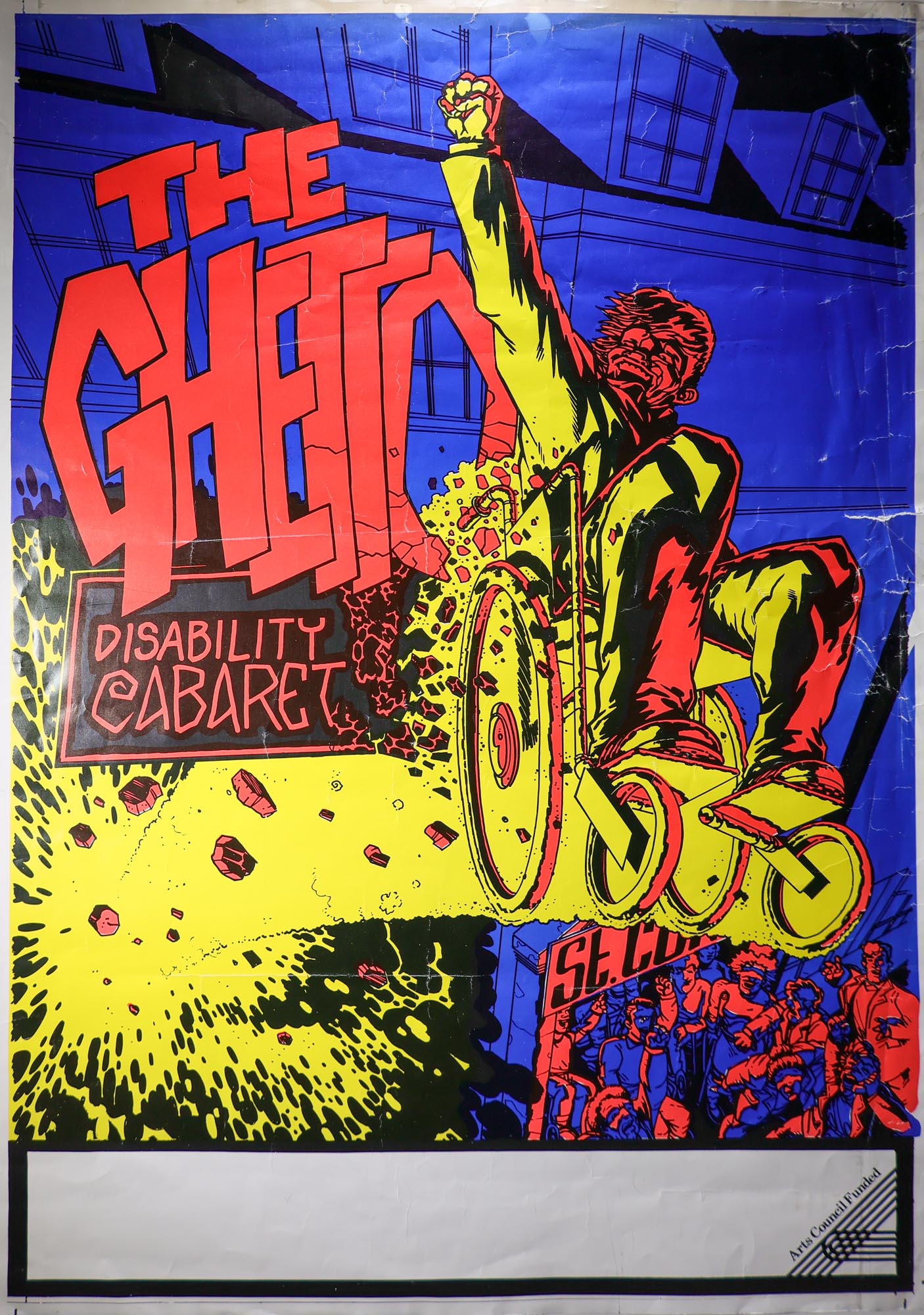
Cabaret was the point at which disability arts and activism converged, and became a central part of NorDAF and Arcadea’s presence. Combining songs, satire, stand-up, sketches, poetry, drama and carnival, cabaret nights like Bedlam and The Ghetto became a place where new ideas could be tried out and new communities formed. The archives that survive of these performances record an atmosphere of irreverence, conviviality, shared laughter and political anger.
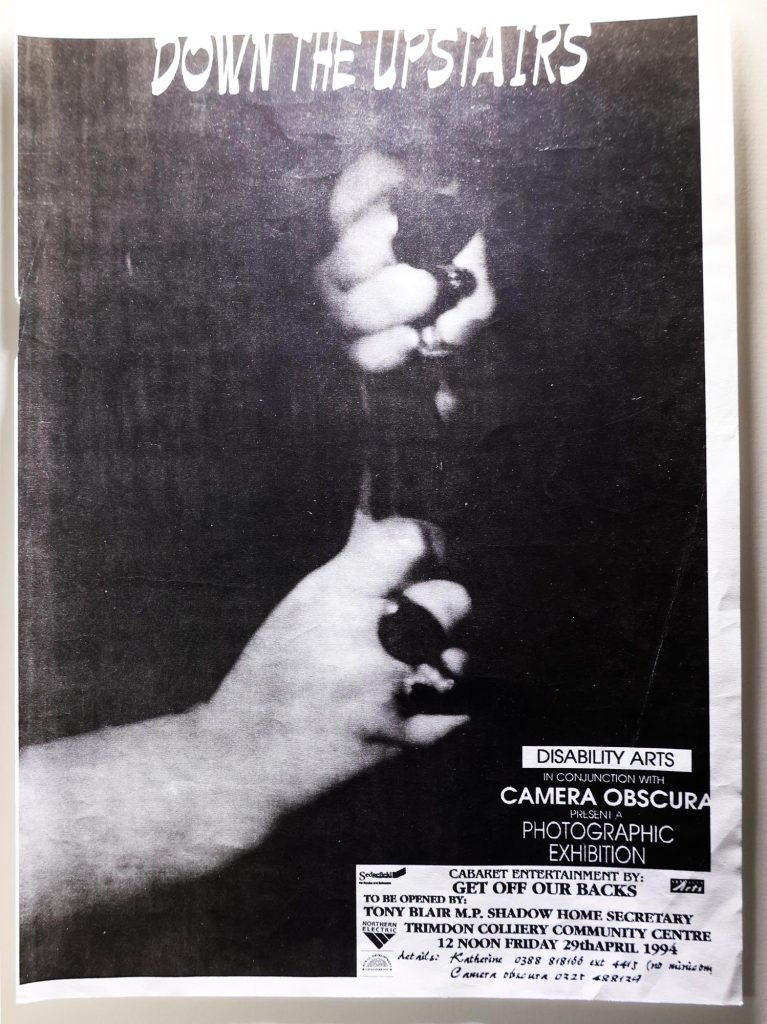
Cabaret is mobile: if you can put together some tables and a stage area, you can do it anywhere. Here, a cabaret performance by the disabled feminist performance group Get Off Our Backs is being put on to launch an exhibition of work by the disabled photography collective Camera Obscura – opened by a local MP whose later record on disability issues was at best mixed.
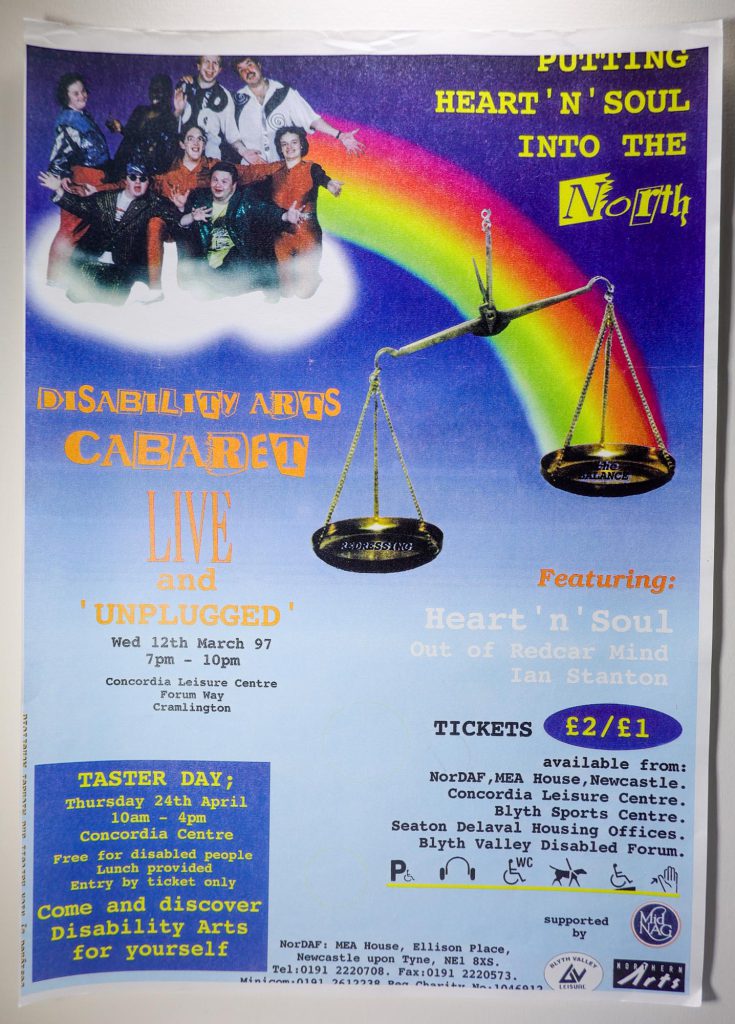
As a form, cabaret allows people to bring as much or as little as they want, to try out new things, and to make links beyond the local scene. Established disabled artists from around the UK could come and perform alongside first-timers, helping build national networks of solidarity. Here, prominent activist and singer-songwriter Ian Stanton (1950-1998), who toured the world with the Tragic But Brave show, is appearing alongside North-East-based acts at Cramlington leisure centre.
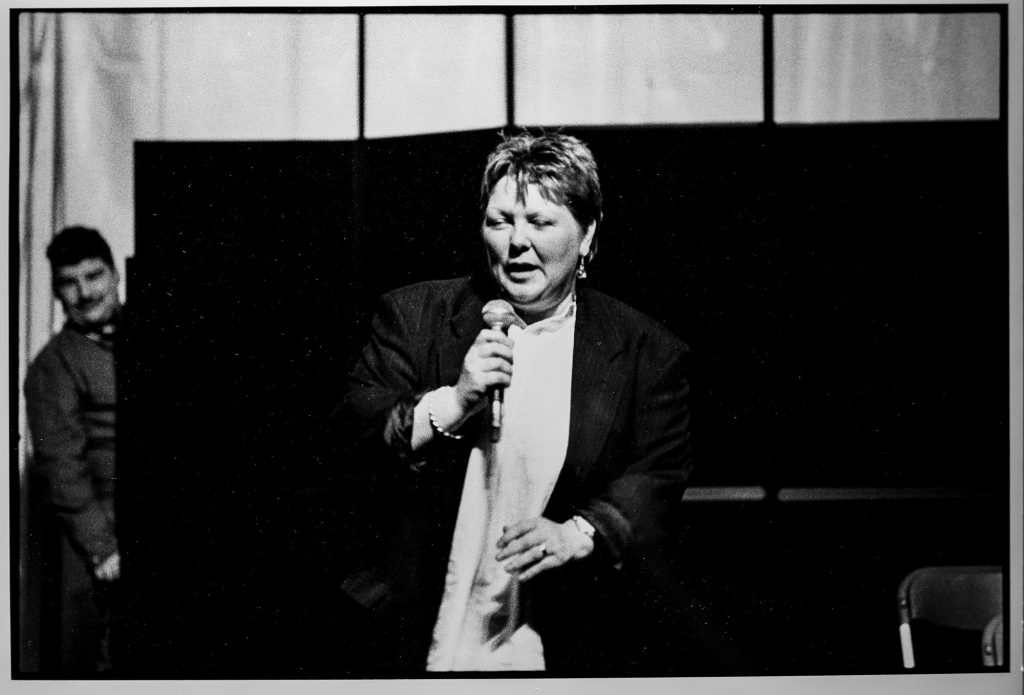
Poetry was a mainstay of the cabaret scene. Here, in one of the rare photos from inside a cabaret, Maggie Cameron gives a reading.
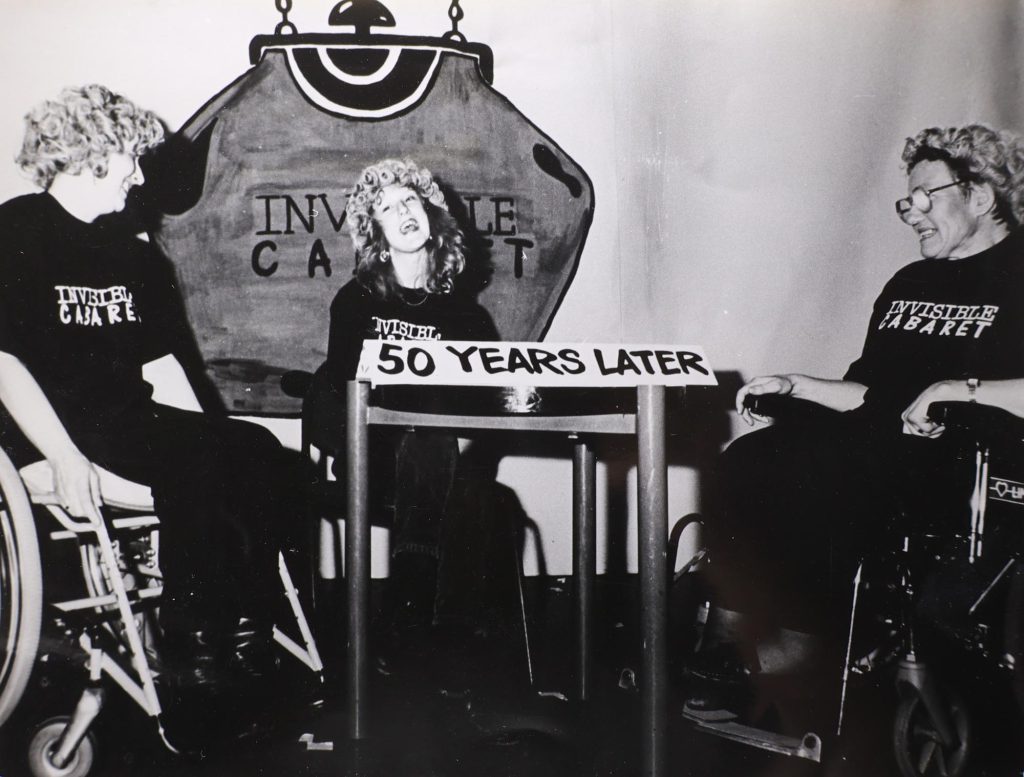
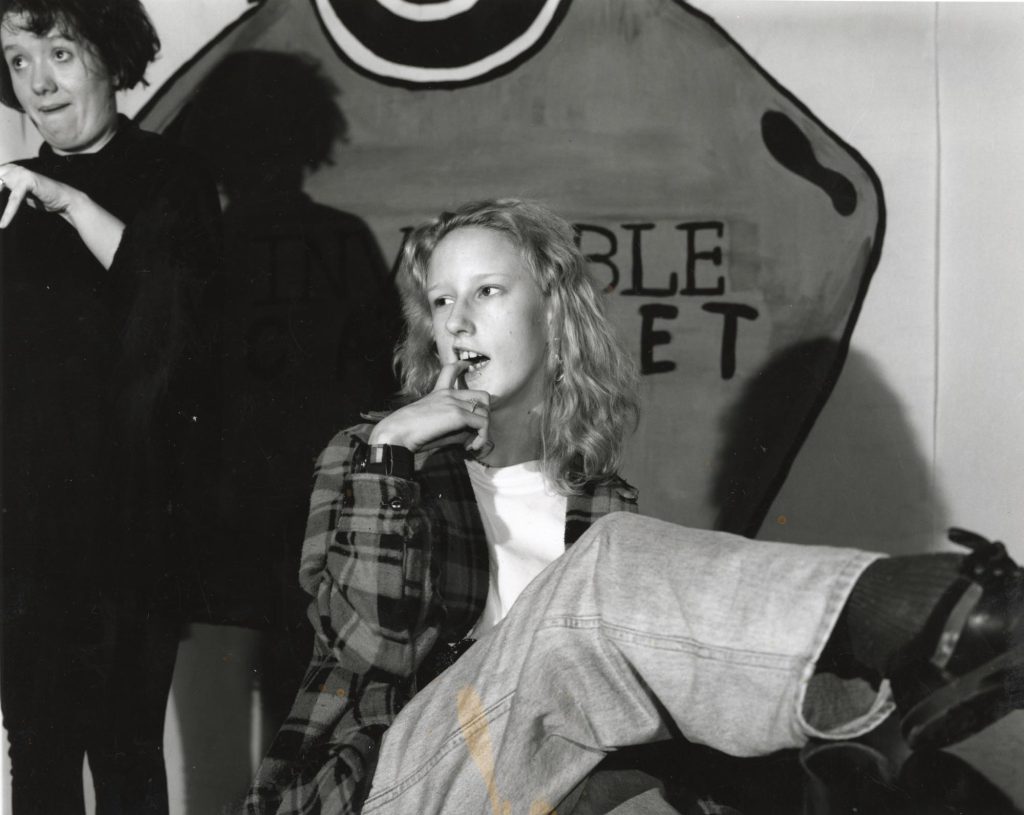
Invisible Cabaret was begun in 1992, as an initiative of the North East feminist community theatre company Them Wifies. Later on, as an independent group, they were based in NorDAF’s headquarters in All Saints Church. Devising shows that refracted their lived experience as disabled women through a comedic lens, and drawing on Augusto Boal’s work on the ‘theatre of the oppressed’ as much as the tradition of satirical cabaret, they became a mainstay of the disability arts scene both in the region and throughout the UK.
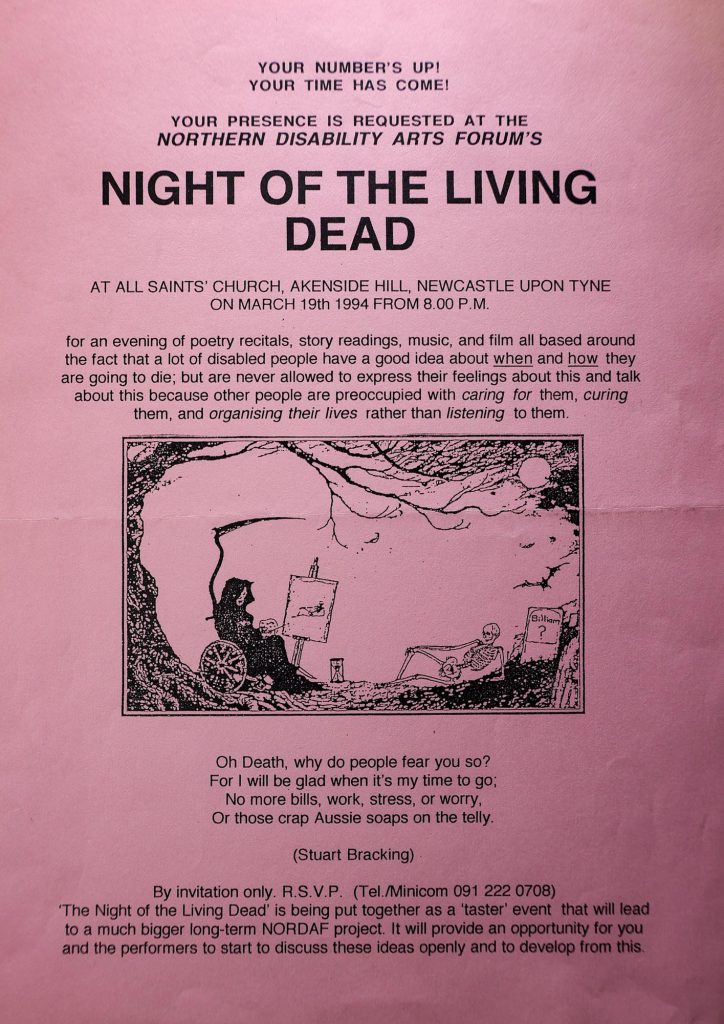
In 1994, the National Disability Arts Forum began a project exploring the lived experiences of those with shortened lifespans or who had had near-death experiences. In the North East, this kicked off with Stuart Bracking hosted a themed cabaret, A Matter of Life and Death, at NorDAF’s headquarters at All Saints’ Church. Working on an idea from Tom Shakespeare and with funding from the Arts Council, the concept eventually became a series of residential weeks around the country, where each participant would have access to tutors, accessible space for creating writing and artworks, and the freedom to create work that expressed their own experiences of living with life-limiting conditions. The result, in 2004, was a book of poetry and reflections entitled Shelf Life, edited by Kaite O’Reilly and Nabil Shaban, and featuring poetry by NorDAF’s own Paula Greenwell.
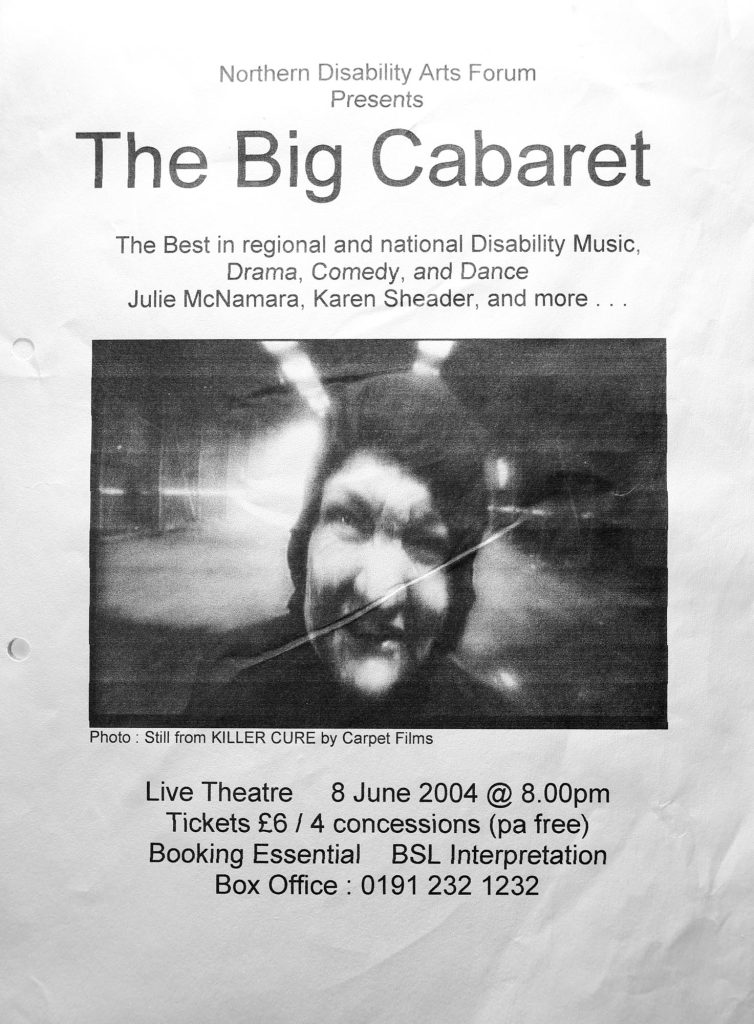
A poster for the ‘Big Cabaret’ in 2005, featuring some of the nationally-prominent names of the disability arts scene.
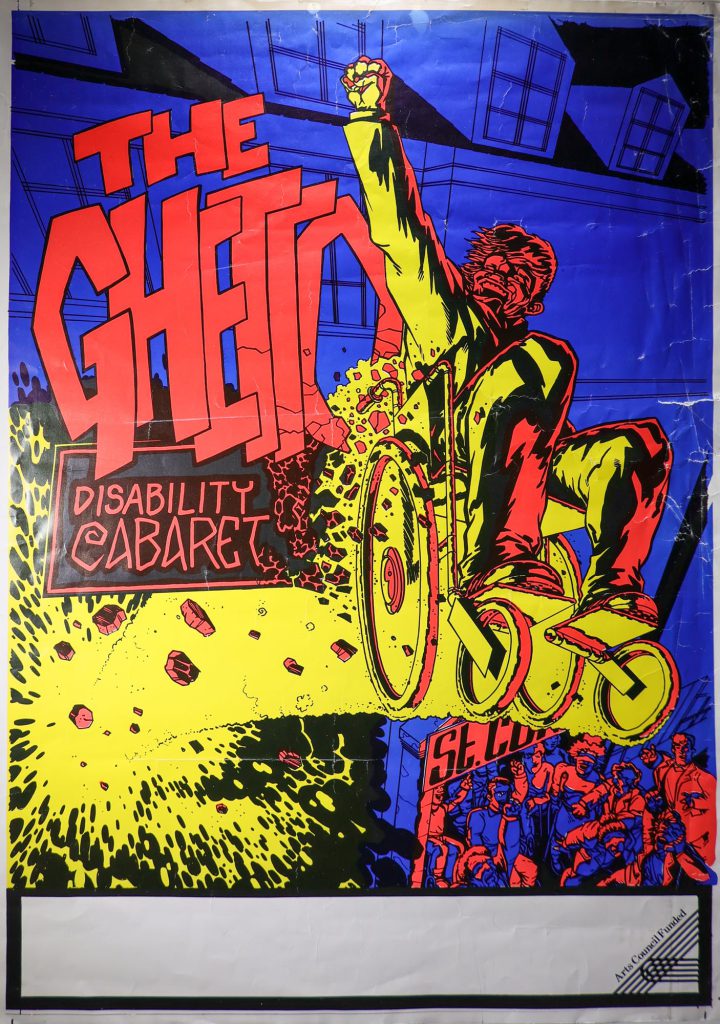
Geof Armstrong and Tom Shakespeare first staged ‘The Ghetto’ at the 1993 Edinburgh Festival.
Here Tom Shakespeare describes the experience of putting on his first disability cabaret at the Edinburgh Festival with Geof Armstrong
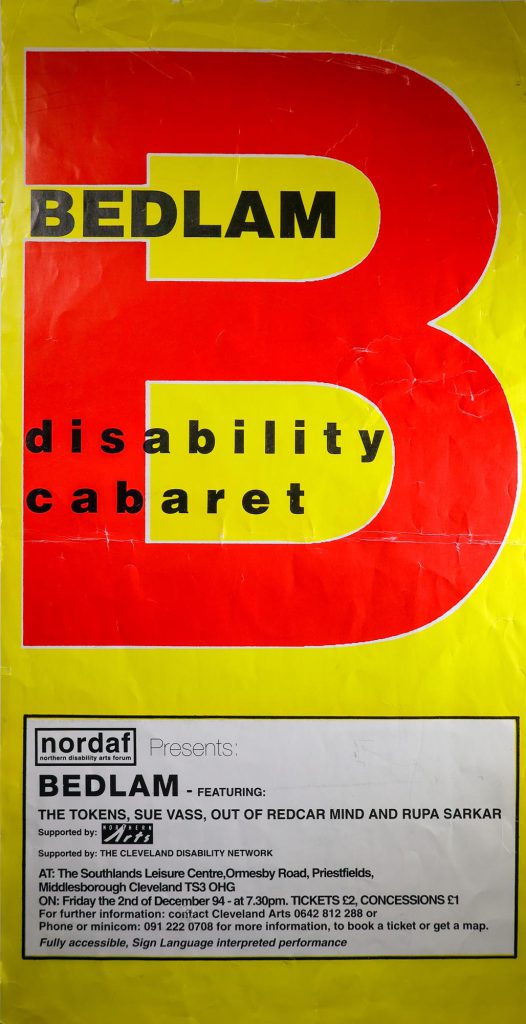
‘Bedlam,’ derived from London’s medieval Bethlem Hospital, became by the nineteenth century a general name for an asylum for the mad; its association with mental illness and connotations of chaos continue to provoke. The Bedlam disability cabaret, staged in Middlesbrough in 1994, uses the name to confrontational effect.